Event 1
Eli’s Death
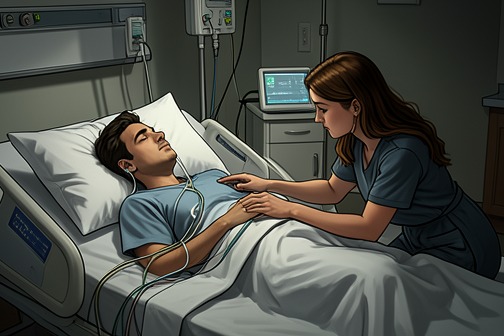
[Eli’s Death](entity:event-recall-event-eli-s-death-4106d628acd4) is the [2007](entity:time-recall-time-2007-d0ad7e2d58d3) hospital-bed scene in which [Eli](entity:character-recall-character-eli-90681e812a09) refuses to let his twin sister, [Esme](entity:character-recall-character-esme-8406273b4a78), heal his leukemia, and dies with her beside him. His choice turns a power that might have saved him into a source of lasting moral pain for Esme: healing can prolong another life, but each use draws the healer closer to death. The scene’s central conflict is not whether Esme can act, but whether love permits her to override the person she most wants to save.
## Illness and refusal
Eli lies in a hospital bed attached to tubes and wires as Esme pleads to heal him. He has leukemia, and the siblings have argued about her ability repeatedly since he became sick. Her healing could prevent his death, but it would shorten her own life. Eli has refused before; now, as Esme understands that there is no recovery coming this time, the familiar disagreement reaches its final consequence.
Their connection is described as the bond of twins: Esme feels that Eli is scared, and she knows his life is nearly over. They are fraternal twins with the same reddish-brown hair and hazel-green eyes, but the scene’s likeness that matters most is the faint gold line over Esme’s vein. Eli’s weak fingers grip her arm and rub over it. The line marks the life she would spend to keep him alive, making the cost of her power visible between them.
Eli’s refusal is not a rejection of Esme’s love. He tells her that she is worth protecting and imagines the life he believes she still has ahead: falling in love, doing great things, and living a future he never could. He fears that accepting her healing would take that future away. His certainty that his own fate has long been sealed contrasts with his insistence that Esme still has control over hers. The decision is painful precisely because both siblings understand what is at stake and want to spare the other.
## The final exchange
Esme cannot accept the approaching loss. She tells Eli she would rather live a shorter life with him as her brother than be without him, and admits that she wants to cry and to make him stop choosing death. But she also knows that healing him against his wishes would break his trust: he would never forgive her. The scene leaves her with no choice that preserves both his life and their bond.
Eli makes that choice explicit: “I’m choosing to let you live, Esme.” Esme climbs into the narrow space beside him on the bed. He wraps an arm around her shoulder and holds her hand with the other, turning their last moments into an embrace rather than an argument. She whispers that he has been with her from the beginning and will be with her until the end, knowing through their bond that his life is about to be cut short.
His parting words join grief to an instruction for the life she must continue: “[Always with you, till the very end](entity:expression-recall-expression-always-with-you-ti-8c297cb687cd), Esme. [Live hard, love strong](entity:expression-recall-expression-live-hard-love-str-acd92c58b600), and when you’re feeling lost, I’ll be your light when the darkness comes.” Then the bond between them shatters. Eli sighs, and the arm around Esme falls from her shoulder. The physical gesture gives the death its finality: the hand that held her is no longer holding her, while his promise of companionship remains in words.
## What remains after his death
Esme’s immediate understanding of her power is bitter: “To have the power to heal, only to draw nearer to death with every use: a curse, not a gift, if I couldn’t even save the ones I loved the most.” Eli’s death establishes the personal limit behind her ability. Healing is not a cost-free rescue, and the person who most needs saving may be the one who refuses to ask Esme to pay for it.
Later scenes place Esme again in medical settings, but on the side of care rather than bedside helplessness. In the emergency department, she encounters an altercation between two injured men while [Liam](entity:character-recall-character-liam-b590d5f3bf76) and [Melissa Ann](entity:character-recall-character-melissa-ann-eca20ce5ebe9) assess them; Melissa Ann steps back to protect her pregnancy. In another encounter, Esme congratulates a patient finishing therapy, responding to his happiness with a hug. These scenes do not undo the loss or establish that she healed the patient. They show her continuing to meet injury, recovery, and vulnerability through her work, even though her defining early experience taught her how little a healer can command from another person’s body.
Her work in the maternity ward brings a different form of hope and unease. Esme helps deliver two babies and supports three mothers in postpartum care, easing their worries as they adjust to their newborns. Watching new parents dote on their children is sweet, but also painful: she had imagined having children herself and is afraid she may not live long enough to see them grow up. The fear gives Eli’s choice an ongoing consequence. His insistence that she live does not guarantee a long or untroubled future; it leaves her to imagine one while aware that her own life can be shortened.
## Narrative and thematic significance
The scene begins the story in 2007 with an intimate loss rather than an account of power as triumph. Eli’s death defines the ethical boundary around Esme’s healing: the ability to save someone does not erase that person’s right to refuse, even when refusal means death. Their twin bond makes this limit especially severe, since Esme feels Eli’s fear and recognizes the moment his life ends, yet cannot choose for him without violating the relationship she is trying to preserve.
Eli’s words also turn his absence into a continuing presence in Esme’s life. He asks her to remember him to her future nieces and speaks of becoming her light in darkness; the shattered bond marks death, while that promise gives her a way to carry his voice forward. The event therefore establishes both the wound and the measure by which Esme understands her gift: healing can save lives, but love cannot make its costs disappear or make another person’s choice belong to the healer.
Event 2
Esme’s First Healing
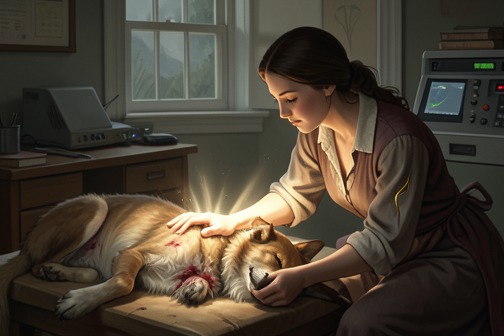
[Esme’s First Healing](entity:event-recall-event-esme-s-first-healing-d76d012c3a20) is the discovery of her ability to mend injuries, first recognized after she saved a squirrel her dog had caught. The gift gives her a way to help others, but its cost emerges alongside its promise: every healing shortens the golden line marking her life. That tension shapes her choices from her twin [Eli](entity:character-recall-character-eli-90681e812a09)’s illness to the later cases she treats and, ultimately, her decision to spend the rest of her life saving [Dorian](entity:character-recall-character-dorian-d83525ba2575).
## Discovery and the Sign of the Thread
The first sign of [Esme](entity:character-recall-character-esme-8406273b4a78)’s unusual nature appeared on her sixteenth birthday, when a golden shimmer became visible in a vein along the middle of her left arm. After she healed the injured squirrel, she and Eli began to connect that mark to her power. They observed that the line grew shorter each time she healed someone. The change was usually small, but it made the ability impossible to treat as cost-free: the visible measure of her life was diminishing with each use.
Esme and Eli searched for an explanation and found an account of [The Fates](entity:creature-recall-creature-the-fates-32493c0e43b6) as keepers of human destiny and life. In their understanding, one sister spun each person’s thread, another determined its length, and the third cut it to decide how that person died. They also read that the gods’ golden blood, called ichor, meant their threads could not be cut. The siblings could not establish whether this account fully explained Esme’s condition, but they feared the consequence they could see: when her golden line vanished, something terrible would follow. Their uncertainty did not lessen the practical risk of healing; it gave that risk a framework and a name.
## Eli’s Refusal and the Cost of Care
The danger became personal as Eli’s leukemia worsened. Esme could potentially save him, but he repeatedly refused her healing because he would rather have less time with her as his brother than live without her. By the time the illness reached its final stage, she understood that using her gift against his wishes could cost her his forgiveness as well as years of her life. The ability therefore placed care and consent in direct tension: she could act, but she could not make the decision harmless simply by wanting to save him.
At his hospital bedside, Esme pleaded to heal him while he lay connected to medical tubes and wires. Her grief was intensified by the knowledge that the bond between them would end soon, yet the golden line on her arm remained a reminder that saving him might also bring her own death nearer. She did not heal him. Eli’s refusal held, and his death turned the power’s limit into an intimate loss: Esme possessed the capacity to heal, but not the right to erase another person’s choice. In the aftermath, she understood the gift as a curse when it could not save the people she loved most.
## Healing as Practice and Hope
Eli’s death did not make Esme stop healing. In her work at the hospital, she encountered injured people in urgent circumstances, including men brought to the emergency department after a fight. She also saw patients benefit from recovery: one man told her that therapy had helped him regain the use of his legs, and his progress made her proud of her gift. The account of his improvement shows why Esme continued despite the cost. Healing was not only an abstract power or a source of danger; it could make a concrete difference in another person’s life.
Her care extended beyond emergencies. While working in the maternity ward, Esme helped deliver two babies and supported three women in postpartum rooms, returning to ease the new parents’ worries. These acts of ordinary professional care sit beside her supernatural healing without replacing it. The ability’s burden did not define every useful thing she did: she also helped through nursing work, attention, and reassurance. Yet the prospect of a shortened life affected how she imagined her own future. She feared she might not live long enough to see children grow up, and that fear made the possibility of having a family difficult to embrace.
## Repeated Choice and Narrative Significance
As the story continues, Esme’s healing becomes a pattern of deliberate care rather than a single discovery. She heals people who are near death, including [Charles](entity:character-recall-character-charles-da7b85dace89) and [Leon](entity:character-recall-character-leon-a75464f214f7), and restores Charles’s ability to use his legs. She keeps these interventions secret from Hero Society and does not seek recognition for them; despite believing that healing may have cost her years, she says she would make the same choices again. The secrecy protects the private character of her actions, while the repeated willingness to help shows that knowledge of the cost never turns into indifference.
The pattern reaches its most consequential point when Dorian is near death. Esme removes the metal lodged in his chest and uses her power to heal him, recognizing that her remaining life is being spent in the process. She continues even when [Rose](entity:character-recall-character-rose-154df6dd1d30) warns that she is giving too much. The act does not cancel the loss of Eli or prove that healing can always overcome death; it brings the gift’s central contradiction to its fullest expression. Esme can preserve another person’s life only by accepting the danger to her own, and she chooses that sacrifice because she cannot bear to lose someone she loves when she can still act.
Event 3
The Pastor’s Hallucinogen Incident

[The Pastor’s Hallucinogen Incident](entity:event-recall-event-the-pastor-s-hallucinog-3b9902a41794) is remembered as the catalyst for a civil war that had begun quietly but threatened to become impossible to contain. Its importance lies not only in the pastor’s act of giving hallucinogens to people with powers, but in the violence that followed and the fragile civic order later scenes show giving way to panic, sabotage, and emergency evacuation.
## The Incident and Its Immediate Context
[Esme](entity:character-recall-character-esme-8406273b4a78) recalls the incident while preparing for a hospital night shift. She describes a pastor giving a hallucinogen to people with powers and says that, ever since that night, a quiet civil war had been taking place in the streets. The conflict was quiet only for the moment: Esme expected it would not remain so. Her account places the incident before the escalating violence, without detailing the pastor’s identity, the drug’s effects, or the exact events of that night.
The memory frames the crisis against Esme’s routine of care. She worked hospital shifts and also served part-time as a nurse at [Hero Society Headquarters](entity:location-recall-location-hero-society-headqua-3344caea6109), helping people with powers and preparing to examine heroes’ blood samples for anomalies, diseases, and vulnerabilities. That ordinary medical work continued beside a society already showing signs of fracture; the danger was not yet a single open battle, but an instability that could reach patients, civilians, and the people trying to protect them.
## From Street Conflict to Urban Emergency
Later, the conflict surrounding powered people expands into a direct attack on the city’s infrastructure. In the early morning, with the bridge empty, [Ajax](entity:character-recall-character-ajax-b81eac50057c) and [Monica](entity:character-recall-character-monica-6400f9ab2ce7) destroy the bridge that provides the only way onto the island. The blast sends its pieces into the water. The destruction is followed immediately by a citywide blackout, with electricity failing block by block as the sun begins to rise.
The loss of power turns an attack on infrastructure into a broader emergency. Police sirens and fire trucks respond, but their efforts cannot restore order. A mandatory curfew is imposed; news of the destroyed bridge spreads, panic deepens, and looting, fighting, and fires take over. These events are not described as occurring on the night of the pastor’s act. Instead, they show how far the conflict has developed from the quiet street war Esme first recalls: violence now reaches the island’s only access route and the systems the city depends on.
## Evacuation and Significance
As danger gathers around [Griffin Enterprises Tower](entity:location-recall-location-griffin-enterprises-39194792a788), [Leon](entity:character-recall-character-leon-a75464f214f7) reports that boats have been secured, while [Lilith](entity:character-recall-character-lilith-88bb50d17890) helps keep people calm and load them aboard. Esme directs frightened groups toward the harbor, where they can leave the island; a nearby police officer repeats her instructions. Leon then runs to pull the tower’s fire alarms, drawing people out. Their response shows that, even amid a breakdown in public order, the heroes remain trusted by some civilians and can still organize a practical rescue.
The evacuation also reflects an uneven response to the approaching danger. Some residents had already fled inland after [Dorian](entity:character-recall-character-dorian-d83525ba2575)’s warning on television, while people who had been rioting and looting were no longer in the area. Esme hopes they have heard the instructions to reach the water and find physical safety, while recognizing that survival would not erase the mental anguish of what had happened. In retrospect, the incident marks the beginning of a conflict whose costs spread beyond the powered people who were given the hallucinogen: later scenes make infrastructure, civilian safety, and mutual aid part of the same escalating crisis.
Event 4
The Demigod Massacre
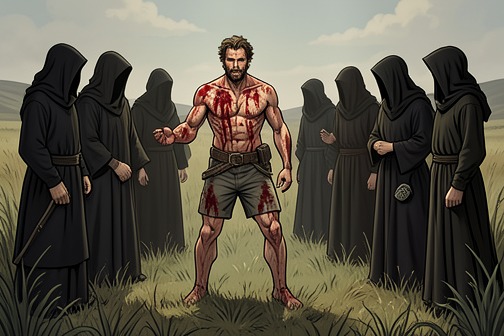
[The Demigod Massacre](entity:event-recall-event-the-demigod-massacre-53df2c265610) is the catastrophe that left [Dorian](entity:character-recall-character-dorian-d83525ba2575) the sole survivor among the demigods he knew. Its defining reversal is that the gods, who had arranged for humans to receive powers to protect them, abandoned their own children to killings carried out by fellow demigods and by the parents who had given them life. Dorian’s account makes the event both a family annihilation and the collapse of his belief that service and goodness might protect him.
## Background and Stakes
The narrative distinguishes demigods from humans chosen to receive divine powers. The latter were gifted, not descended from the gods; the gods had empowered them so humanity could still be protected after the gods perished. Their own children, by contrast, had divine blood but were left exposed. Dorian describes the demigods as murdered by one another and by their parents, a stark inversion of the protection the gods had extended to humans.
Dorian had once been a healer who used his abilities to help mankind and followed the work of his father, [Apollo](entity:character-recall-character-apollo-1cf2b99589fd), god of the sun, music, medicine, and prophecy. He still yearned for Apollo’s approval. In his recollection, the gods’ decision to treat all demigods as expendable therefore falls against a personal history of service: Dorian had tried to do good, yet goodness did not spare him or his family. The massacre turns his former devotion into evidence of how little protection that devotion offered.
## The Killings and the Failed Escape
The killings are remembered not as a single duel or isolated attack, but as the destruction of a community. When Dorian searched the dead, he checked for signs of life and found none. He had never expected demigods to turn on their own kind; the memory emphasizes that the survivors of the violence were then killed by those who had brought them into the world. The perpetrators thus included both members of the threatened group and its divine parents.
Dorian had prepared a tonic intended to make death appear real, hoping he and [Jasmine](entity:character-recall-character-jasmine-79d2b1fff339) could escape the killings together. He was in his garden making it when the violence separated them: Jasmine became lost in the turmoil, while Dorian was cornered in a temple. He drank alone, relying on the appearance of death to keep those seeking to kill him from recognizing that he remained alive. His plan offered a narrow means of survival, but not a shared escape; the separation that defeated its purpose became inseparable from his grief over Jasmine.
## Survival and Awakening
The toxin made Dorian appear dead. He woke days later and discovered that every other demigod had been slain. Survival was therefore not a victory over the massacre so much as a delay in discovering its full result. The means that saved him depended on concealment: to those who came to kill him, he seemed already dead, while in reality he remained alive long enough to wake into the aftermath.
That survival also left Dorian alone with the knowledge of what had happened. His account joins the discovery of the dead to the broader betrayal by the gods: he had not been spared because the demigods were protected, but because the toxin temporarily disguised him as one of the dead. The distinction between appearing dead and being dead is the event’s immediate mechanism of survival, while the loss of everyone else makes that mechanism profoundly incomplete.
## Jasmine and the Aftermath
Jasmine’s death gives the mass killing its most intimate cost in Dorian’s memory. She had also used her powers to help mankind, and the two had been together for a short time before falling deeply in love. They had imagined working in temples of healing, where their gifts could serve people. Dorian also remembered a future they had pictured together: marriage, children, and growing old enough to die together in bed. The massacre extinguished that anticipated life as well as their hope of escaping it.
When Dorian finds Jasmine, he crosses the blood-covered ground to hold her body. He kisses her forehead and speaks a prayer for her soul to find peace in Elysium. He then makes a pyre for Jasmine and his fellow demigods, unwilling to leave them where they had fallen. These acts do not undo the killing, but they give the dead the care denied to them in life: Dorian searches for Jasmine, mourns her, and ensures that his kind are not simply left on the ground.
## Memory and Significance
The massacre returns to Dorian as the nightmare he identifies as his worst memory. It begins in a familiar way, and he knows that he can only watch the events unfold again. The remembered scene thus preserves the difference between knowing the outcome and being unable to change it: even with the massacre already understood as the defining loss of his past, the dream offers no power to intervene.
The event’s contrasts organize its meaning. Humans without divine ancestry are given powers for protection, while the gods’ own children are abandoned; Dorian uses healing to serve mankind, yet cannot save Jasmine or the demigods; and the toxin preserves his life only by making him seem dead. His later ritual of mourning answers the destruction with care, not rescue. The massacre is consequently both the origin of Dorian’s survival and the loss that gives that survival its lasting weight.
Event 5
The Gods Choose Draco
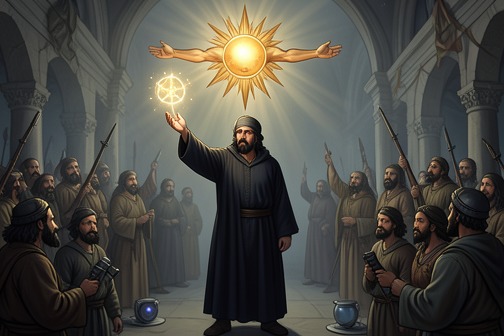
[The Gods Choose Draco](entity:event-recall-event-the-gods-choose-draco-2b3b7d67ce2d) is the divine selection and empowerment that makes [Draco](entity:character-recall-character-draco-5a037d4d1c74) an immortal leader charged with protecting humanity after the gods have turned against the demigods. Recalled by [Dorian](entity:character-recall-character-dorian-d83525ba2575), the event is at once a public appointment and a private rupture: while the gods present Draco as humanity’s last safeguard, Dorian sees the choice as another betrayal by the powers that have already destroyed his people.
## Background and Stakes
The selection follows the demigods’ extermination. Dorian survived only because he had taken a toxin that made him appear dead; when he woke days later, he found that every other demigod had been slain. The memory of that loss shapes what he witnesses next. [The gods](entity:character-recall-character-2edd86ee9b99) are not choosing a leader from an intact community: they are acting after having condemned their own children, including demigods who had used their abilities to help humanity.
Dorian’s understanding of the gods’ predicament adds a larger political and supernatural stake. Humanity has reacted to the killing of the gods’ children by abandoning belief and faith in them. As human belief ebbs, the gods themselves begin to die. Their choice of Draco therefore comes after the consequences of their violence have reached them, and they frame the appointment as one last opportunity to save the humans they love more than their own blood.
The gods tell Draco that he is their chosen protector. Their plan extends beyond his individual power: divine abilities will be sent into the blood of mortals, who will depend on Draco to train and lead them. The appointment thus links one immortal champion to a future community of empowered humans, while making the person selected responsible for organizing and guiding them.
## The Selection and Empowerment
Dorian watches the decision happen directly. The gods choose Draco as their leader of heroes, a designation that places him above the demigods who have been killed and sets him apart as the instrument through which the gods will continue their purpose. For Dorian, the contrast is immediate and bitter: the gods select Draco over their own children, even after the destruction of those children has become a crisis for both gods and humanity.
The appointment becomes a ritual of submission and transfer. Draco slowly removes his armor and shirt, turns his back toward the gods, and sinks to his knees. One by one, they mark his back with their blood and divine symbols. Dorian first witnesses the gods’ choice and then its physical inscription: Draco’s new authority is not merely announced but embodied in the marks that identify him with the gods and their power.
When the last god has transferred blood and power into Draco, the gods disappear. Their departure closes the ceremony and leaves its consequences behind in Draco. Dorian struggles to believe what he has seen, but the transformation is not ambiguous: the gods have made Draco immortal and charged him with protecting humankind after exterminating the demigods.
## Dorian’s Position and Reaction
The same event means something different to its two central witnesses. For Draco, the kneeling posture and acceptance of divine power accompany the role of chosen protector. For Dorian, the scene confirms his exclusion. His own history as a healer who served humanity under [Apollo](entity:character-recall-character-apollo-1cf2b99589fd) makes the contrast particularly sharp: he had used his powers to help people and had still been judged expendable by the gods.
Dorian’s response is anger and jealousy, which he allows to grow into hatred of Draco. He seeks to destroy him, only to discover that Draco is immortal. That realization converts the ceremony’s promise into a practical obstacle for Dorian: the gods have not only elevated his rival but made him extraordinarily difficult to kill. The event therefore plants a conflict that extends beyond the scene, from the gods’ decision to Dorian’s later pursuit of Draco.
## Consequences and Significance
The gods’ choice does not undo the demigods’ deaths or reconcile Dorian to the gods. Instead, it establishes a new arrangement after the massacre: Draco is to protect humanity, while divine power is to pass into mortal blood and be organized through his leadership. The gods’ disappearance marks the end of their direct presence in the ceremony, but their authority persists through the power they have bestowed and the duty they have assigned.
For the story, the event joins rescue to betrayal. The gods present Draco’s empowerment as a final effort to preserve the humans they love, yet that effort follows their destruction of their own children. Dorian’s witnessing keeps the moral contradiction in view: the chosen protector’s rise is also the moment when a former healer, himself a demigod survivor, recognizes that he has been passed over. The ceremony consequently explains both Draco’s exceptional status and the grievance that will drive Dorian against him.
Event 6
Dorian Builds His Powered Army
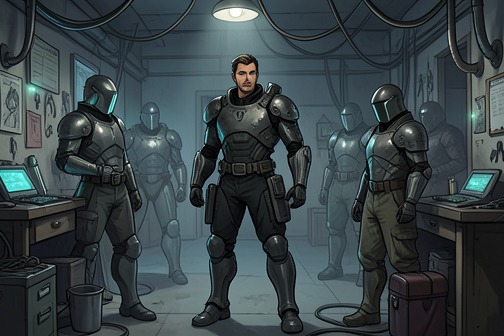
[Dorian Builds His Powered Army](entity:event-recall-event-dorian-builds-his-power-b1370df907bb) is the turning point at which [Dorian](entity:character-recall-character-dorian-d83525ba2575)’s long-standing grievance becomes an organized military project. He combines blood-based power transfer with a vision of liberation that also serves his revenge: the gifted, in his view, should no longer hide their abilities, and his new force will give him the means to challenge [Draco](entity:character-recall-character-draco-5a037d4d1c74) and the Hero Society.
## Motive and Design
Dorian’s plan grows from jealousy and anger over Draco being chosen in preference to the gods’ own children. He tried to destroy Draco, then learned that Draco was immortal; even demigods, Dorian understood, would eventually die. He therefore set himself three aims: to become immortal, prevent Draco from completing his mission, and let humanity collapse into its own chaos. He describes the first aim as the easy part. The other two remained obstacles, and his pursuit of revenge gave the project its direction.
The army was not simply a collection of followers. Dorian wanted to reproduce powers that already existed among the Hero Society’s members, giving his own people comparable abilities. He saw these powers as gifts that people should be free to use for their own needs. In his view, Draco’s standards for deciding who was fit to wield power—and the Hero Society’s forgiveness of Draco for killing people he judged unfit—made its moral authority suspect. Dorian’s opposition thus rested on both a personal vendetta and a broader dispute over who could use power, and under whose rules.
## Blood, [Immortality](entity:state-recall-state-immortality-30ca2dae1a05), and Transfer
Blood is the mechanism joining Dorian’s survival to the army’s creation. He maintains his immortality by infusing gifted people’s blood with his own, a process that takes several hours and leaves him bedridden until it is complete. He watches the infusion machine mix his gold-tinged blood with donated blood from a man powered by a god. The procedure is a recurring requirement, not a permanent escape from physical limits: Dorian later notes that he can grow weary in a fight, even though his energy returns quickly.
The supply of blood also changes the practical scale of his operation. Dorian once took donations from people he encountered on the streets; by the time he describes the process, the hospital has so much donated blood that he no longer needs to obtain it himself. Donors give without thinking about their powers, allowing him to draw on a supply whose significance they do not recognize. He presents Draco’s blood as the missing key: when mixed with the blood of people whose DNA carries power genes, it allows those powers to persist in new hosts. That discovery converts blood from a means of extending Dorian’s life into the basis for building a force.
## The Army and Its Training
Dorian calls the result his own version of the Hero Society, while stressing that its members are not clones. They are new hosts with the same kinds of powers as the people he opposes: strength, empathy, and shapeshifting, alongside a computer specialist and a killer. The only power he says he lacks is magic, which he considers of little use against the power of the gods. This comparison gives the army its purpose: it is designed to meet the Hero Society on familiar ground, but under Dorian’s command.
He does not treat the new abilities as ready-made weapons. Dorian instructs his followers to keep practicing until they can control their powers, then moves among them to check their progress. His attention to training suggests that the transfer alone is not enough; the recipients must learn to use what they have gained. He believes the work is proceeding smoothly and thinks that Emanuel’s fall to the heroes has, paradoxically, helped by demonstrating how much time had been wasted. The remaining priority, he concludes, is obtaining blood from Draco.
## Ideology and Opposition
Dorian frames his project as a campaign to end concealment and fear. He wants the gifted to live openly and without persecution, arguing that people with power should not be made to belittle what they have been given. His account of the future he rejects is embodied by [Phillip](entity:character-recall-character-phillip-0559221f1a2c): Phillip’s power comes from [Apollo](entity:character-recall-character-apollo-1cf2b99589fd), as does a power Dorian shares, but Phillip’s visions are constant, while Dorian can switch his own future-sight on and off. Phillip sees a future in which people like themselves are heroes, protected while they save and defend humans. Dorian knows that imagined ending and chooses a different path.
The distinction between their visions is central to the army’s meaning. Dorian speaks of freedom, but his project also depends on using other people’s blood and directing their newly acquired abilities toward his own objectives. His rhetoric of release therefore exists beside a hierarchy of command: he selects the strategic aim, orders practice, and expects the hosts to follow him. When Draco confronts him and demands that he end the harm, Dorian presents their disagreement as two competing visions of how to improve the world. Neither regards the other as a neutral opponent; their conflict is personal as well as political.
## Deployment and Consequences
The army’s later actions make clear that its creation was preparation for an actual confrontation. Dorian deploys allies to destroy the bridge connecting the island to the mainland; the bridge is empty when it falls, but its destruction cuts off the route onto the island. A citywide blackout follows, block by block, as the next phase of his plan begins. These actions turn his argument about freedom into a military campaign with consequences for the city and its inhabitants.
Before the fighting, Dorian urges the remaining members of the Hero Society to join him, telling them that their organization is over and that humans who had recently been willing to hurt them had abandoned them. He acknowledges that he expects them to refuse. The city then becomes a battlefield, with opponents matched against one another, while Dorian and Draco meet as the conflict’s central duel. Dorian’s army is thus both the practical instrument of his challenge and the embodiment of his unresolved grievance: it gives him a force capable of confronting Draco, but carries his struggle over freedom into a violent contest for control.
Event 7
Monica’s Attack Near Hero Society Headquarters
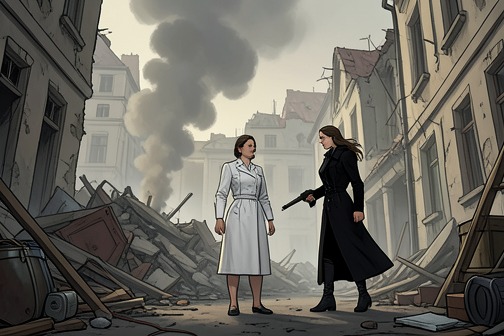
[Monica](entity:character-recall-character-monica-6400f9ab2ce7)’s attack near [Hero Society Headquarters](entity:location-recall-location-hero-society-headqua-3344caea6109) turns [Esme](entity:character-recall-character-esme-8406273b4a78)’s brief walk toward the Society into a first encounter with an opponent who frames the conflict as a struggle between control and freedom. After an explosion destroys a nearby building, Esme is left exposed in the street while Monica confronts her. [Draco](entity:character-recall-character-draco-5a037d4d1c74) and [Asher](entity:character-recall-character-asher-01705a571519) arrive before the encounter can escalate further, but Monica escapes, leaving behind a threat against the Society and an early indication of the destructive role she will play in the wider conflict.
## Causes and Background
The attack takes place after Esme finishes a hospital shift. Still energized from working, she walks the few blocks to Hero Society Headquarters, curious to see whether anyone is there. Her thoughts are on how much her life has changed: only months earlier, [Melissa Ann](entity:character-recall-character-melissa-ann-eca20ce5ebe9) had been almost her only friend; now Esme feels she has a wider circle within the Society as well. The explosion abruptly breaks into this tentative sense of belonging. The building she is passing is destroyed, and she is thrown into the street.
Esme has reason to expect help nearby: the Society’s headquarters is not far away. But in the moments after the blast, she finds herself alone. She is dazed and unable to assess the scene beyond herself at first; when she looks around, she sees no one else there. Her healing gift offers no practical defense against the attacker, and she has no combat training. The mismatch between her capacity to heal and her inability to fight leaves her dependent on help arriving in time.
Monica gives the attack a personal motive. She says the building’s owner was an old friend who needed to learn a lesson after refusing her. The explanation presents the explosion as retaliation against an individual, not as an attack whose purpose is initially stated to be a direct assault on the Society. Yet the location brings Esme, a member of its circle, into immediate danger, and Monica’s later warning makes the political dimension of the encounter explicit.
## The Confrontation
Monica emerges from the damaged building with fire appearing to gather into or be absorbed by her body. She approaches Esme as she lies in the road and reaches toward her hair. Esme knocks her hand away and tries to keep her occupied, hoping someone from the nearby headquarters will arrive. When Esme attempts to get up and flee, Monica catches her by the leg. The exchange makes the imbalance in the encounter plain: Esme is still recovering from the explosion and cannot match Monica’s force.
Draco arrives with Asher, who is chanting while watching the burning building. Draco orders Monica to stop. Rain begins to fall over the fire and gradually puts it out; the scene associates Asher’s chant and the changing weather, though it does not explain the mechanics of his action. Their arrival shifts the balance without immediately ending the confrontation. Monica turns back to Esme and warns her that the group wants gifted people controlled, while her own side wants them free. She urges Esme not to join the Society and predicts that it will not remain standing if it continues to oppose them.
Monica then demonstrates another kind of power. She stamps on the ground, sending a shockwave through the pavement. Draco braces and holds his position, while Asher is thrown backward several feet. Monica runs before they can attack her and disappears within seconds. Her escape means that the encounter produces no capture or resolution: the immediate danger passes, but the opposing group’s intentions have been announced directly to Esme.
## Consequences and Continuing Conflict
Draco reaches Esme first and checks on her, helping her stand. The attack therefore also establishes the practical presence of allies who can intervene when Esme’s healing abilities are not enough to protect her. Her exposure in the street contrasts with the family and support she had been reflecting on just before the explosion; the new sense of belonging is real, but it does not make her safe from the conflict surrounding the Society.
The confrontation’s argument about freedom and control is not resolved by Monica’s explanation. She casts the Society as an instrument of restraint and her own group as the defenders of freedom, while her chosen methods include destroying property and threatening a person caught nearby. The gap between that claim and the danger she creates complicates her appeal: Esme is asked to distrust the Society by someone who has just made her vulnerable. Monica’s stated position is clear, but the episode does not establish that her actions are supported by the building’s owner or by Esme.
Monica’s later participation in the destruction of [Seahill](entity:location-recall-location-seahill-4b7d6e6652b8)’s bridge extends the significance of this first encounter. In that later operation, she works with [Ajax](entity:character-recall-character-ajax-b81eac50057c) to bring down the bridge, cutting off the island’s main route of access; a citywide blackout follows as part of the unfolding attack. Those later events are distinct from the explosion near headquarters, but they show that Monica’s earlier threat belongs to a broader campaign of disruption rather than ending with her escape. The first meeting introduces both the personal danger she poses to Esme and the opposing vision she uses to justify resistance to the Society.
Event 8
Esme Discovers Dorian’s Identity
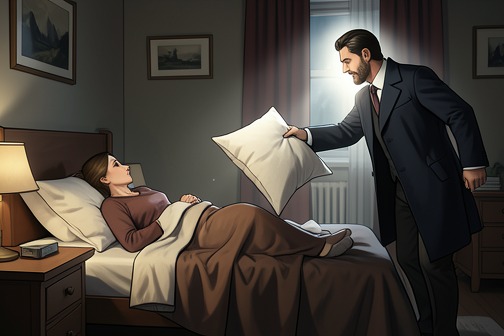
[Esme Discovers Dorian’s Identity](entity:event-recall-event-esme-discovers-dorian-s-5270bf0e3419) is the private confrontation in which [Esme](entity:character-recall-character-esme-8406273b4a78) recognizes [Dorian](entity:character-recall-character-dorian-d83525ba2575) as the man of light fighting the Hero Society. The discovery joins two truths she had kept apart: her concealed healing and Dorian’s concealed place in the conflict. Its decisive turn is not only the exposure of his identity, but Esme’s recognition that her love for him persists even as she understands him as a villain.
## The Encounter and Its First Reversal
Esme has woken and returned to bed, intending to sleep for several more hours before getting ready for work. As she lies on her back under the covers, a bright light flashes in the bedroom and vanishes. Her startled reaction gives way to a confrontation with Dorian, whose presence immediately unsettles the ordinary privacy of the apartment. The scene begins not with a planned meeting but with an abrupt disturbance in a space where Esme had expected to be alone.
The exchange turns against Esme when Dorian catches a pillow thrown at him and tosses it back onto the bed. He calls attention to her healing and warns that she will not last long if she continues helping people. That warning makes clear that he knows not merely that she has powers, but what she does with them and what healing costs her. Esme has kept her ability covered and taken care that no one could trace her healing to her. Her first response is therefore paralysis and disbelief: Dorian’s knowledge breaks through the secrecy on which she has relied.
## What Dorian Knows
Esme asks directly how he learned about her powers. Dorian answers that he has seen her vein and can smell the Fates on her, adding that this scent grows more potent when she is near the sick and injured. He connects that presence to her ability to control their destiny. The explanation places Esme’s private healing in relation to the Fates, an association she and [Eli](entity:character-recall-character-eli-90681e812a09) had suspected in the past but that had not been confirmed to her in this encounter before Dorian speaks.
His account also changes the meaning of his warning. Dorian is not simply guessing at Esme’s secret: he presents himself as able to perceive its supernatural source and its intensification around those she heals. When Esme asks how he knows the Fates’ scent, he says that he used to know them. His face gives nothing away, leaving the claim starkly stated rather than explained. Esme has more questions than she can follow, and the revelation brings on a headache; the knowledge arrives faster than she can organize it.
## Recognizing the Man of Light
Esme assembles the clues she has: the flash of light, Dorian’s age-old familiarity with the Fates, and the Hero Society’s negative reaction to him. She recalls hearing people at the Society discuss the man of light and say that he had been there all along, though they had not named him. These details resolve into recognition: Dorian is the man of light, the figure fighting against the Hero Society.
The recognition is also a betrayal by omission. Esme feels caught between what the heroes withheld and what Dorian left unsaid. He had not lied outright about who he was, she concludes, but he had left too much out; his earlier insistence that he was not the good guy had not prepared her to understand that he was the actual villain of [Seahill](entity:location-recall-location-seahill-4b7d6e6652b8). The distinction matters to her: the evidence was present in fragments, but she had not known how to read it, and both sides had allowed that incomplete understanding to stand.
## Rejection, Love, and the Unresolved Bond
Esme tells Dorian coldly that he needs to leave. He replies that he told her who he was and that she let him in anyway, then takes a step closer. His answer does not undo what she has learned, and it presses the contradiction between disclosure and concealment: he considers his statement enough, while she is confronting the scale of what he omitted. Esme tries to strike him again, but he catches her hand mid-slap.
That physical interruption does not settle their conflict. As Dorian’s head begins to descend, Esme recognizes that hatred has not displaced love; she loves him more, despite what she has just discovered. The event ends with her naming the frightening truth to herself: she has fallen in love with the villain. The revelation therefore changes her understanding of Dorian without giving her a clean emotional escape from him. His identity becomes unmistakable, but her attachment remains, leaving the confrontation suspended between rejection and intimacy.
Event 9
The Charity-Gala Battle and Esme’s Sacrifice
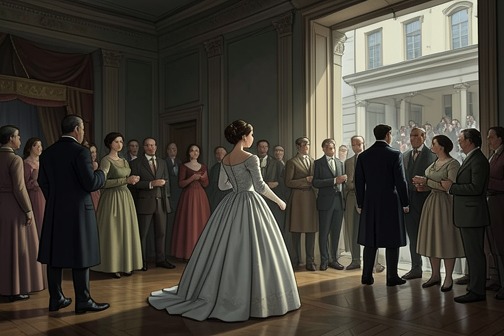
[The Charity-Gala Battle and Esme’s Sacrifice](entity:event-recall-event-the-charity-gala-battle-73a6974c2d86) is the confrontation in which [Dorian](entity:character-recall-character-dorian-d83525ba2575)’s crew attacks the Hero Society, Dorian’s hidden abilities come into view, and [Esme](entity:character-recall-character-esme-8406273b4a78) gives her remaining life to save him. The sequence moves from a dance-floor separation to a clash between opposing forces, then narrows to the choice that determines its most intimate and devastating outcome: Esme heals the man she loves at the cost of her own survival.
## Causes and Background
The battle erupts just after Esme has spoken from the heart to Dorian, believing he can love despite his own doubts. His attention turns abruptly toward the door, and he leaves her alone on the dance floor. [Phillip](entity:character-recall-character-phillip-0559221f1a2c) arrives beside her, while [Draco](entity:character-recall-character-draco-5a037d4d1c74) and [Rose](entity:character-recall-character-rose-154df6dd1d30) appear moments later; Esme does not wait for an explanation, but follows Dorian outside. The sudden departure makes the public conflict feel continuous with the private one: Esme has just hoped Dorian might choose closeness, and now she runs after him into a crisis that exposes how far apart their positions have become.
Outside, the Hero Society stands opposite part of Dorian’s crew. [Leon](entity:character-recall-character-leon-a75464f214f7) explains that the crew caught the Society by surprise, broke into its headquarters, locked its members in a containment room, and ransacked the building. His account gives the confrontation a clear history of aggression rather than presenting it as an unprovoked meeting in the street. The damage and the containment-room assault establish why the Society is ready to fight, while the presence of Dorian’s people shows that the conflict has already spread beyond a personal rivalry.
Dorian is attending to one of his people when he moves toward Esme’s group. He says the time to fight has not yet come and turns away. Esme understands that he has a role to play, even as his withdrawal hurts her. Draco, however, will not relinquish the chance to seize Dorian. His attack transforms the standoff into a direct duel before either side has resolved the larger conflict.
## The Battle and Its Revelations
Draco lunges at Dorian, who evades him with remarkable ease. Phillip warns that Dorian has sight like his own, and Esme realizes that Dorian possesses a power she had not known about. The discovery unsettles her trust in the relationship: she wonders whether Dorian had planned for her to fall in love with him, though the scene presents that as her fear rather than a confirmed motive. His concealed ability changes the meaning of the duel as well, making his movements seem informed by more than speed or skill.
The confrontation also brings a further revelation about Dorian’s identity. Draco’s disbelief and the exchange that follows establish that Dorian is a demigod, a fact that reframes the adversaries’ struggle as a clash between immortals as well as rival leaders. Dorian attacks with a fierceness Esme had never imagined in him and declares his desire for revenge. The duel is close enough to make both men vulnerable; Esme fears for them because neither appears to hold a decisive advantage.
The fight between the two leaders becomes the signal for the wider battle. A member of Dorian’s crew moves against Leon, and others follow. Powers that have been stolen confront their originals, turning the clash into a conflict between people whose abilities are bound together by violence and appropriation. From Esme’s perspective, the spectacle resolves into an image of brothers fighting brothers and hatred meeting hatred. She drops to her knees, overwhelmed by the scale of the struggle and by the conviction that it must end.
## Esme’s Sacrifice
The duel’s decisive reversal occurs when Draco takes a piece of fallen rebar and drives it into Dorian’s chest. Esme is close enough to see the moment unfold, and Dorian falls. He is barely alive when he addresses her, bringing the battle’s immediate danger into direct focus: the man who had just seemed a formidable opponent is now at the edge of death.
Esme pulls the metal free and places her hands over Dorian’s wound, directing her healing power into him. The effort makes the cost visible. Her hands glow gold, while the color drains from her vein; she understands that healing him is consuming what remains of her life. Rose warns that Esme is giving too much, but Esme continues. Her decision is not an abstract pledge of devotion: she can see that Dorian needs more than she can spare without losing her own future, and she gives it anyway.
The healing takes all she has. Esme’s power disappears along with her remaining years, and she weakens beside Dorian. He recovers enough to sit up and cradle her. The reversal is stark: Draco’s attack has brought Dorian to the brink of death, but Esme’s intervention restores him by transferring the fatal cost to herself. The battle’s decisive rescue is therefore also a personal loss, not a clean victory for either side.
## Aftermath and Significance
As Esme approaches death, the scene shifts away from the combatants and toward her farewell. She looks toward the stars and senses darkness coming; then [Eli](entity:character-recall-character-eli-90681e812a09) appears. Esme recognizes him as her brother, and his light surrounds her as he takes her home. The narrative closes her part in the confrontation with this departure, confirming the consequence of her choice without describing the wider battle’s eventual outcome.
The event binds together the story’s conflict over power and its account of love. Dorian’s hidden sight and demigod identity deepen the danger surrounding him, while the clash between stolen abilities and their originals gives the violence a history larger than the duel. Yet the decisive act belongs to Esme: faced with Dorian’s near-death and the known cost of healing, she spends her remaining life to save him. Her sacrifice heals Dorian, but it does not establish that the opposing forces reconcile or that the battle itself ends. Instead, the scene leaves two consequences in tension: Dorian survives, and Esme does not.
Event 10
Dorian’s Victory in the Final Battle
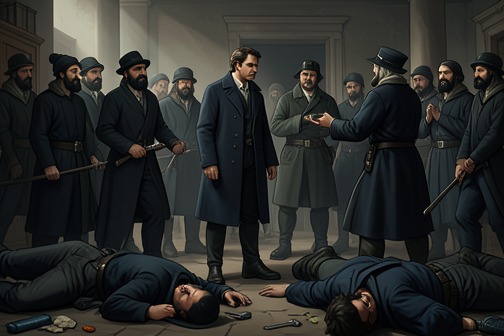
[Dorian’s Victory in the Final Battle](entity:event-recall-event-dorian-s-victory-in-the-79e75a304419) is a military success that leaves its central moral and personal conflicts unresolved. [Dorian](entity:character-recall-character-dorian-d83525ba2575)’s army prevails over Hero Society, and he announces that the victors are free; yet the scene places that declaration beside fallen allies, a defiant surviving opponent, and a challenge from [Phillip](entity:character-recall-character-phillip-0559221f1a2c). The result is victory in the contest for power, but not a settled peace or a shared understanding of freedom.
## Causes and Stakes
Dorian’s campaign is framed as a struggle over whether people with powers should remain hidden or be able to live openly. In an earlier confrontation, [Draco](entity:character-recall-character-draco-5a037d4d1c74) demanded that Dorian end his plans before more people were hurt. Dorian answered that they were both trying to improve the world but held different visions of what that meant. Their physical similarity is set against their opposing purposes, while Draco’s controlled manner gives the exchange the quality of a confrontation between people who understand one another’s resolve but cannot accept one another’s course.
Dorian’s commitment hardens after personal loss. He returns to training, leaves his work at the hospital because it takes time from his preparations, and focuses on becoming faster, more precise, and more disciplined. With the solar eclipse only days away, he expects to reach the height of his power and believes the heroes will be unable to stop him. He interprets the attempt to reach him through love not as a reason to reconsider but as a further source of anger. The battle therefore follows not from a sudden dispute alone: it is the culmination of preparation, grief, and his conviction that the existing order denies freedom to people with powers.
## The Assault and the Battle
Dorian’s preparations include an attack on the city’s access and infrastructure. He watches [Ajax](entity:character-recall-character-ajax-b81eac50057c) and [Monica](entity:character-recall-character-monica-6400f9ab2ce7) destroy the bridge, the only route onto the island; after it falls into the water, a second phase begins as electricity goes out block by block. The destruction isolates the city and turns the coming confrontation into a struggle over a place whose ordinary connections and services have been cut off.
Before the fighting, Dorian makes a direct appeal to the opposing side. He argues that Hero Society has ended, that people with powers should join him and live without fear or persecution, and that humans have abandoned them. He also attacks the heroes’ moral certainty, insisting that good and evil do not divide neatly and that people can act badly for good reasons, or the reverse. No one answers. Dorian expects no change of heart, but the speech establishes that he regards the battle as an argument about the right to live freely as much as a contest of force.
The appeal gives way to combat, with fighters facing opponents they consider their equals. [Leon](entity:character-recall-character-leon-a75464f214f7) and Ajax, [Lilith](entity:character-recall-character-lilith-88bb50d17890) and Monica, Phillip and Ron Presley, and [Jesse](entity:character-recall-character-jesse-9add889b79bb) and [Echo](entity:character-recall-character-echo-748e2d408c30) take separate matchups; Jesse and Echo fight in animal forms, while [Asher](entity:character-recall-character-asher-01705a571519) faces Trix, whose power concerns shadows. Dorian turns his attention to Draco, whom he regards as the opponent he must finish. Their fight is prolonged and physically demanding. Dorian cannot die and recovers his energy quickly when weary, whereas Draco’s strength is sustained by sunlight, which could last for days unless he returned it to the earth. Dorian is also more focused and lethal than in their previous fight, anticipating Draco’s moves either through observation or by seeing the future. The battle’s stakes are consequently sharpened by an imbalance of endurance, even as both continue to fight.
## Victory and Its Human Cost
After the fighting, Dorian declares that Hero Society has lost and that his side is free. His army raises its fists, making the victory visible as a collective triumph rather than only his personal claim. But his gaze also falls on the dead. He presents his objective as liberation, not rule: he says he had offered people the chance to join him and leave Hero Society, and rejects the idea that he wanted to become king. In his account, the point was for powered people to come into the sun and live as themselves instead of watching over humanity from the shadows.
The dead and the surviving fighters make the cost of that victory concrete. [Rose](entity:character-recall-character-rose-154df6dd1d30), Phillip’s sister, lies among the fallen; Draco had gently placed her hands over her stomach after her death. Leon and Lilith are found embracing, their deaths bound to Lilith’s decision to sacrifice herself to save Leon’s soul. Dorian acknowledges that Echo and Asher will survive, although both have been through the fighting: Echo calls out that the heroes will never give up, while Asher stands beside her. Their refusal matters because it contradicts any suggestion that Dorian’s declaration has ended resistance. The battle has defeated Hero Society in the immediate confrontation, but it has not persuaded its survivors to accept Dorian’s cause.
## Aftermath and Significance
Draco’s fall appears to confirm Dorian’s victory, but not to remove Draco from the story’s conflict. Dorian expects him to heal, while judging that he will never truly live. Phillip rushes to Draco and removes the sword from his wound. Dorian responds with a taunt that Draco chose wrongly and lost everything; Phillip answers by condemning Dorian as undeserving of the love Draco received, then lunges at him. The exchange turns the battlefield’s outcome back into a personal reckoning. Even after Dorian’s army has raised its fists, the people left standing remain bound to grief, loyalty, and accusation.
The event’s central irony lies in the distance between Dorian’s language of freedom and the destruction through which he pursues it. He rejects the role of king and condemns a society that keeps powered people in the shadows, yet the route to his proclaimed liberation includes a severed bridge, a citywide blackout, and the deaths of people on both sides. The ending gives him the battlefield and the declaration, but not an uncontested moral victory: Echo’s defiance, Phillip’s attack, and the dead themselves leave the consequences of his cause in view.
Event 11
Dorian's public revelation of the gifted
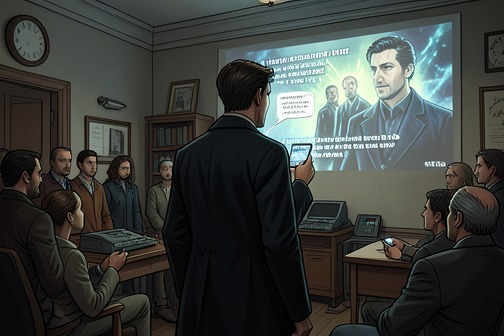
[Dorian's public revelation of the gifted](entity:event-recall-event-dorian-s-public-revelat-b619fd2a0f41) is a broadcast that converts concealment into open confrontation. Interrupted dancing gives way to an image of [Dorian](entity:character-recall-character-dorian-d83525ba2575) addressing the world from the capitol: he announces the presence of people with powers, names the next day’s solar eclipse as the beginning of a new era, and threatens the heroes who might resist him. The scene’s decisive change is not only that a secret is spoken aloud; a celebration loses its fragile peace and becomes a preparation for war.
## The interruption and its medium
The announcement reaches the assembled characters through an ordinary phone. [Phillip](entity:character-recall-character-phillip-0559221f1a2c) asks the room to watch, taps the device, and projects its screen onto a wall. The simple sequence matters: a private, portable object becomes a public-facing display, redirecting everyone’s attention at once. The dancing stops, and the room’s social life is replaced by collective stillness before the broadcast. Rather than receiving news at a distance, those present watch the revelation take over the space in which they had been celebrating.
The timing sharpens that rupture. Just before the interruption, [Draco](entity:character-recall-character-draco-5a037d4d1c74) and [Rose](entity:character-recall-character-rose-154df6dd1d30) have exchanged declarations of devotion, imagining one another as sun, moon, stars, and world. Phillip’s announcement cuts across that intimate happiness without warning. The contrast is carried by the scene’s movement: affectionate exchange, dancing, a phone screen on the wall, then a room watching in silence. The broadcast does not erase the preceding joy; it makes that joy newly precarious.
Dorian appears in a room described as resembling the Oval Office, and Phillip confirms that the transmission is on every channel and that Dorian is at the capitol. His setting and the broadcast’s reach give the announcement the form of a public address, not a private message. Its audience is presented as the world, while its impact is also immediate and local: those gathered in the room become witnesses as the screen displaces their celebration.
## A secret made into a declaration
Dorian opens by telling his audience to wake up and stating that people with powers are among them and will not leave. The statement makes explicit what had remained concealed: the gifted are not an approaching possibility but already part of the public’s world. His wording also presents their continued presence as settled. He does not ask to be recognized or offer a negotiation; he declares that the hidden condition is over.
The broadcast’s tone reinforces the announcement’s threat. Before speaking, Dorian gives the camera an evil smirk, while the observing narrator reads his expression as that of someone treating the people watching as toys. This is not a neutral disclosure of information. The performance presents Dorian as controlling the encounter, choosing how to address his audience and making the revelation itself an assertion of power.
He then frames visibility as liberation from life in the shadows. His terms leave the public with a stark choice: fear the gifted or join them. The formulation brings exposure and allegiance together; the issue is no longer only whether people with powers exist, but how others will respond to a group that announces it will not retreat. Dorian’s declaration thus changes secrecy from a condition to be maintained into the dividing line of an impending conflict.
## The eclipse deadline and the threat to heroes
Dorian attaches a precise deadline to his announcement: the solar eclipse of the century will occur the following day. He predicts that darkness will cover the earth and declares that the age of the gifted will begin then. The eclipse is therefore more than a date marker in the speech. It is the event Dorian names as the threshold between concealment and the new order he claims is coming. The broadcast makes the transition sound imminent rather than distant or hypothetical.
His final warning singles out the heroes. Dorian tells them that they may try to stop his side, but that resistance will cost them everything. The threat closes off any interpretation of the disclosure as a peaceful appeal for acceptance: the same speech that announces the gifted also anticipates opposition and promises consequences. He leans closer to the camera, and the narrator feels that he is staring directly at her. The public address consequently acquires a pointed, personal edge within the room, even as its stated audience remains much wider.
Dorian disappears in a bright flash of light after delivering the warning. The abrupt exit leaves the declaration unanswered and the threatened conflict unresolved. Its structure is compressed but consequential: revelation, deadline, ultimatum, disappearance. No debate or response can soften the terms he has set before the broadcast ends.
## The room after the broadcast
The immediate aftermath is registered in the people watching. The narrator looks at Rose and finds Rose looking back; both wish they had more time to be happy together. That exchange places the public crisis against a particular relationship and a happiness that has only just been expressed. Their shared look does not change Dorian’s announcement, but it makes its cost legible as a threat to the lives and future the characters had moments earlier been inhabiting.
The narrator names the arrival of darkness and recognizes that the peace is over. The scene ends not with a battle, but with the decision that it is time to prepare for war. That shift is the broadcast’s immediate consequence for the room: people who had been dancing become witnesses to a threat and understand that action will follow. Dorian’s revelation therefore functions as both public disclosure and a turning point in the surrounding narrative, moving the conflict from hidden existence toward open confrontation on the eve of the eclipse.
Event 12
Dorian's assault on Seahill
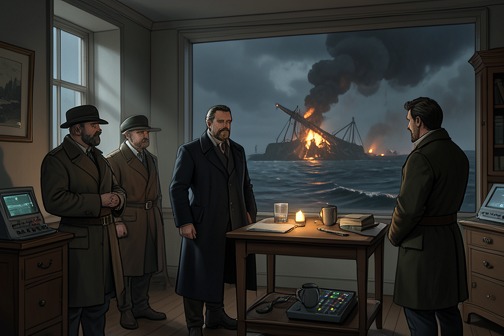
[Dorian](entity:character-recall-character-dorian-d83525ba2575)’s assault on [Seahill](entity:location-recall-location-seahill-4b7d6e6652b8) is a coordinated attack on the island’s access and essential infrastructure, designed to make isolation and civic panic do much of the work for him. The destroyed bridge and spreading blackout expose his strategy and his contempt for ordinary people; the mass evacuation that follows shows that his attempt to unleash chaos does not prevent people from organizing to save one another.
## Causes and Preparation
Dorian sets the operation in motion from the training room, where most of his crew are waiting. He sends [Ajax](entity:character-recall-character-ajax-b81eac50057c) and [Monica](entity:character-recall-character-monica-6400f9ab2ce7) to destroy the bridge, framing the attack as the opening move in a larger plan. Monica approaches him before leaving, but Dorian turns away and knocks her hand aside. His sharp rejection sits within the same scene as his orders: personal contact is refused while the crew is dispatched to carry out the plan.
The assault relies on a sequence rather than a single strike. Ajax and Monica are to bring down the bridge first; Dorian expects the resulting disruption to be followed by greater disorder. [Jesse](entity:character-recall-character-jesse-9add889b79bb), who hosts [Echo](entity:character-recall-character-echo-748e2d408c30)’s gift and can shift into animals, is present but is not yet assigned a role. Dorian considers the timing, not Jesse’s potential, decisive: Jesse’s turn has not arrived. The crew’s waiting and the ordered deployment give the attack a staged quality, with the bridge destruction marking the transition from preparation to action.
## Bridge Destruction and Blackout
Dorian watches from a nearby rooftop in the very early morning, when the bridge is empty. A large explosion brings it down piece by piece into the freezing water. Because it is the only way onto the island, its destruction makes the assault an act of physical isolation as well as sabotage. The attack does not begin with people caught on the bridge; it removes the route itself before the city’s response can take shape.
The next phase follows immediately. Lights go out across Seahill, block by block, until electricity is gone. The progression turns a citywide system into a visible sequence of failures, while the ruined bridge and the blackout compound one another: the island has lost its sole land connection just as residents lose power. Dorian believes that people accustomed to electricity have not had to learn how to survive without it. He contrasts their dependence with his own past experience of living off the land and intends the disruption to force them back toward harsher conditions.
Police sirens and fire trucks appear as morning begins, but Dorian regards the response as futile. He expects the population to intensify the crisis through its own actions, rather than needing his crew to direct every act. The governor imposes a mandatory curfew, and police patrol slowly through the streets, broadcasting instructions over their radios. Residents do not comply. News that the bridge has been knocked out adds to the panic, while looting, fighting, and fires spread.
## Dorian’s View of the Disorder
From his rooftop vantage, Dorian treats the breakdown as confirmation of a settled judgment about humanity. He rejects the idea that evil deeds require a devil or supernatural force: in his account, one nudge is enough for people to do the damage themselves. He names violence and greed as recurring features of human behavior and sees desperation as the condition in which people will do almost anything. The blackout is therefore more than a practical obstacle for Seahill; it is, in his view, a test that exposes what people are already capable of doing.
His judgment also has a specific measure of human failure. Dorian considers kindness less common than self-interest and recalls what he has seen in hospitals: elderly people treated as burdens, alongside doctors and nurses described as perpetrators of abuse and violence. These observations do not establish that every person in Seahill behaves in the same way. They establish the outlook through which Dorian watches the attack: he interprets social breakdown as evidence that people cannot be trusted to protect one another, and sees little reason to protect them from threats posed by their neighbors.
## Evacuation and Immediate Outcome
The assault does not end with the city’s descent into disorder. In the response around [Griffin Enterprises Tower](entity:location-recall-location-griffin-enterprises-39194792a788), [Leon](entity:character-recall-character-leon-a75464f214f7) reports that boats have been secured, while [Lilith](entity:character-recall-character-lilith-88bb50d17890) works to keep people calm as they board. Residents are directed toward the harbor; a nearby police officer repeats the instructions. Leon is then sent to pull the tower’s fire alarms, bringing people out of the building. The alarms turn the tower into a place to evacuate rather than a place to remain amid the crisis.
Some residents have already left the island, having fled inland after Dorian’s televised warning. Others, including people previously seen rioting and looting in the area, are no longer there. The evacuation effort also uses fear as a practical tool: Echo slithers through the area, and people flee from the giant snake. The immediate threat of the world ending recedes from their attention as escape becomes their priority. Within an hour, most people have been evacuated from the island successfully.
Those remaining form a small and varied group: one person can control water but has not trained in the ability after hiding it for years, and four others are ordinary humans without powers. The narrator admires their willingness to stay, initially doubts whether they can help, and ultimately accepts that they have the right to fight for their lives alongside the powered defenders. The assault thus produces an outcome its instigator’s contemptuous view of humanity does not fully account for: amid panic and destructive behavior, residents and responders also coordinate, guide people to safety, and choose to stand together.
Event 13
Dorian's solar-eclipse plan
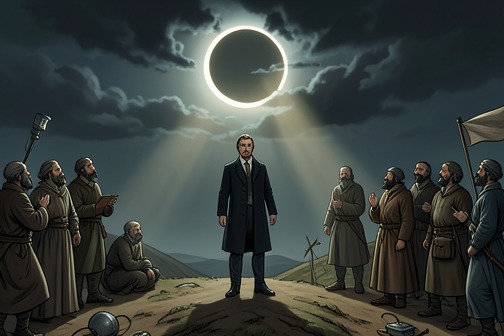
[Dorian](entity:character-recall-character-dorian-d83525ba2575)’s solar-eclipse plan turns a rare astronomical event into a means of taking sunlight from the world and announcing a new age for the gifted. As the century’s eclipse approaches, he declares that gifted people will no longer remain hidden; during the eclipse, he absorbs sunlight from around the globe, deliberately limiting the darkness to one day while making human suffering part of his revenge.
## Announcement and stakes
Before the eclipse, Dorian presents the coming darkness as a political turning point. He says that gifted people need no longer live concealed, and offers the public a stark choice: fear them or join them. The eclipse of the century becomes the deadline attached to that declaration, the moment when the age of the gifted will begin.
His warning is directed not only at the public but at the heroes who might resist him. He predicts that they will lose everything if they try to stop his side. The announcement therefore links liberation, intimidation, and impending conflict: Dorian describes his followers as being set free, while making clear that the change will not depend on the heroes’ consent. The eclipse is both a natural event and the public threshold of his intended order.
## The eclipse at [Seahill](entity:location-recall-location-seahill-4b7d6e6652b8)
Dorian watches the moon begin to cross the sun from the top of [Griffin Enterprises Tower](entity:location-recall-location-griffin-enterprises-39194792a788), identified as the tallest tower in Seahill. The elevated vantage places him above the city as the eclipse starts, but his plan extends far beyond the local scene: the sunlight he will take comes from around the globe.
The physical progress of the eclipse marks the plan’s movement from declaration to action. Dorian’s observation of the moon crossing the sun is followed by his account of absorbing the sun’s radiation. When the moon has completely covered the sun, he describes night taking over. The sequence makes the eclipse more than a backdrop: its visible stages accompany the widening scale of his action, from a man watching the sky in Seahill to a supernatural act affecting sunlight worldwide.
## Taking the sunlight
As the eclipse unfolds, Dorian’s body glows with the sun’s radiation while he absorbs every ray he can. He describes light from around the globe coming to him in a blast, making the scope of the event explicit: he is not merely taking what reaches him in one place, but drawing on sunlight from across the world. Once the last sunlight has entered his veins, his vision is tinged with a glow and a subtle current runs over his skin. The bodily details register the power he has accumulated without changing the central consequence for everyone else: the earth is left in darkness.
Dorian sets a limit on that darkness. He intends it to last for one solid day, not indefinitely, because he does not want to doom the planet by holding the light until plants wither and nature slowly dies. This restraint is not compassion for people: he explicitly wants them to suffer as his people have suffered, and sees keeping them alive as necessary to that purpose. The plan thus joins a stated boundary with a stated cruelty. He will not let the world’s ecology die, but neither is preserving it an act of mercy.
## Revenge and the gifted age
The eclipse plan gives Dorian’s political promise a physical form. He announces an end to secrecy, then takes the sunlight that ordinarily sustains the world, making the arrival of the gifted’s new age inseparable from imposed darkness. His language of freedom sits beside his threat to the heroes and his intention to inflict suffering on humanity; the contradiction shows that the change he proclaims is not simply emancipation, but power asserted through coercion.
The one-day limit sharpens that purpose. Dorian distinguishes between destroying the world and keeping it alive in order to make it endure a period of suffering. The eclipse therefore concentrates his grievance into a temporary, worldwide crisis: sunlight becomes both the source of his newly gathered power and what others are made to lose. The event’s decisive turn is not only that the sky darkens, but that Dorian makes the darkness an instrument of revenge and a declaration that the gifted will no longer remain in the shadows.
Event 14
Draco and Rose's wedding
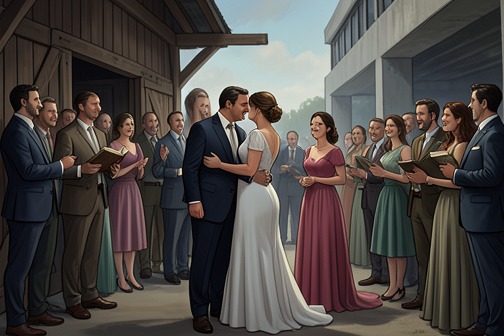
[Draco](entity:character-recall-character-draco-5a037d4d1c74) and [Rose](entity:character-recall-character-rose-154df6dd1d30)’s wedding is both a marriage and a short-lived refuge from the crisis engulfing [Seahill](entity:location-recall-location-seahill-4b7d6e6652b8). Planned around the couple’s determination to be together, the intimate celebration gathers their chosen family and Rose’s relatives; its tenderness becomes more consequential when [Dorian](entity:character-recall-character-dorian-d83525ba2575)’s broadcast interrupts the reception, turning a private day of commitment into the threshold of open conflict.
## Background and preparations
The wedding takes shape quickly once Draco and Rose tell their friends, though [Phillip](entity:character-recall-character-phillip-0559221f1a2c) had already booked a wedding barn months earlier in case the moment proved right. Rose responds to that preparation with delight and embraces him, making the venue part of an effort to mend the rift between brother and sister. The booking reflects a possibility Phillip had kept open; the decision to marry gives it purpose.
[Lilith](entity:character-recall-character-lilith-88bb50d17890) immediately takes charge of organizing the event, assigning people to work. [Echo](entity:character-recall-character-echo-748e2d408c30) and [Asher](entity:character-recall-character-asher-01705a571519) arrive later, embrace the couple, and offer to help. Draco is less concerned with the location or arrangements than with the result: he wants Rose as his wife. The practical urgency of assembling a wedding and the certainty of that wish sit side by side, giving the preparations a distinctly communal character without displacing the couple at their center.
The gathering is deliberately small. It consists of the crew and Phillip and Rose’s parents and grandparents. Draco describes those relatives as the only true family he has, so the guest list marks more than the scale of the ceremony: it brings his belonging into view. Elsewhere, the crew has grown from friends into a family that welcomes people openly, while Rose and Phillip’s closeness recalls the bond Draco shared with his twin brother, [Eli](entity:character-recall-character-eli-90681e812a09). The wedding therefore joins a new marriage to an already important network of chosen and biological kin.
## Ceremony and marriage
The ceremony takes place beneath a snow-covered tree beside the barn. Draco wears a tuxedo for the first time; outside, the weather is bitterly cold, but Asher’s magic buffers the guests from it, making the scene feel like spring despite the winter landscape. The formality of dresses and tuxedos is unusual for most of the group, who enjoy the chance to dress up. These details make the gathering feel carefully marked off from ordinary life without removing its informality or intimacy.
Rose’s father walks her down the aisle as she and Draco look at one another. Draco sees her in a long-sleeved lace top ending at the waist and a ball-gown skirt, and wishes he could preserve the sight in a photograph. The moment concentrates the ceremony’s stakes in their mutual recognition: Rose is accepting him with his flaws, and Draco is prepared to make her his wife. The vows move quickly. Draco gives his answer hastily, touches her cheek, and closes the distance between them; when they kiss, the surrounding world falls away for a moment.
For Draco, the marriage completes a change that began when he found Rose in his chicken coop. He had initially resisted his feelings and then welcomed them; now he regards Rose as his wife and his world, and understands his commitment as one that admits no limit to what he would do for her. The guests’ laughter and congratulations bring the couple back into the shared celebration. Their private intensity and the group’s warm response become parts of the same event rather than competing claims on it.
## Reception and temporary respite
After the ceremony, everyone moves into the barn. White fabric hangs from the rafters, a chandelier is tied to the middle rafter, and a single long table stands beside a large stone fireplace burning brightly enough to heat the room. The arrangement suits the small guest list. A last-minute DJ supplies the music, and Draco and Rose begin their first dance as husband and wife.
The reception gives the group an evening in which love, happiness, and laughter can take precedence. Seahill’s chaos is not resolved or forgotten permanently; for this one night, however, the wedding lets the guests set their woe and helplessness aside and dance. Its respite is therefore real but bounded. The celebration offers a pause in the surrounding danger, not an escape from it.
## Dorian’s interruption
That boundary becomes unmistakable when Phillip interrupts the dancing to show the room something on his phone. He projects an image of Dorian onto the wall. The guests stop dancing and turn their attention to the screen, and the wedding’s focus shifts from the couple’s future together to a crisis confronting the wider world.
Dorian addresses the public, declaring that people with powers are among them and will not disappear. Draco recognizes the announcement as the arrival of the darkness they had feared. He and Rose look at each other, both wishing they had more time in their happiness; the peace of the wedding is over, and preparation for war becomes the immediate concern. The abrupt cut from first dance to projected broadcast makes the event’s reversal precise: a day affirming love and family becomes the moment that private celebration yields to public danger.
Event 15
The Battle of Seahill
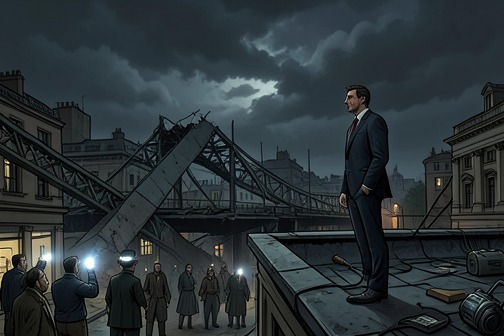
[The Battle of Seahill](entity:event-recall-event-the-battle-of-seahill-0b5ce0e0a71d) is the citywide clash between [Dorian](entity:character-recall-character-dorian-d83525ba2575) and the heroes resisting him, where competing claims to make the world better harden into a fight with no easy retreat. Its decisive significance lies in the collision of public ideals and private loss: Dorian calls on the heroes to abandon their cause, then faces [Draco](entity:character-recall-character-draco-5a037d4d1c74) as other battles unfold around them and the dead transform the conflict into something still more personal.
## Causes and Opening
The battle follows a deliberate attack on [Seahill](entity:location-recall-location-seahill-4b7d6e6652b8)’s access and infrastructure. Before the fighting begins, Dorian observes [Ajax](entity:character-recall-character-ajax-b81eac50057c) and [Monica](entity:character-recall-character-monica-6400f9ab2ce7) preparing to destroy the bridge, the sole route onto the island. He flashes to a nearby rooftop to watch. It is very early in the morning, and the bridge is empty when the explosion comes; piece by piece, it falls into the freezing water. The assault moves immediately into a second phase: electricity fails block by block until the city is without power. The bridge’s destruction and the blackout make the coming confrontation a coordinated operation rather than an isolated skirmish, and leave the city in darkness as the forces meet.
Dorian also tries to win the heroes over before fighting starts. He argues that Hero Society is finished and urges them to join him, promising freedom from fear and human persecution. He invokes their recent abandonment by humans and the fate of the gods, whom he says humans failed to stand by. His appeal presents surrender as liberation and recasts loyalty to the heroes’ cause as a choice to repeat the gods’ fate. Dorian acknowledges that the heroes will see the conflict as a simple contest between good and evil, but believes there is a middle ground: people he considers good can do bad things for good reasons, just as their opposites can. No one answers him. The silence makes clear that his argument has not moved them.
## Battle Lines and Opposing Causes
Dorian begins the fight with a challenge—“Let’s dance, heroes.”—and the city becomes a battlefield in which he says only one side can win. Rather than moving as one mass, the combatants pair off against opponents they regard as their equals. [Leon](entity:character-recall-character-leon-a75464f214f7) faces Ajax; [Lilith](entity:character-recall-character-lilith-88bb50d17890) faces Monica; and [Phillip](entity:character-recall-character-phillip-0559221f1a2c) fights Ron Presley alongside a hospital survivor who can read minds. The matchups give the battle a series of personal contests within its larger struggle, while the attackers’ separate engagements spread the violence across the city.
[Jesse](entity:character-recall-character-jesse-9add889b79bb) and [Echo](entity:character-recall-character-echo-748e2d408c30) take animal forms and fight as animals. [Asher](entity:character-recall-character-asher-01705a571519) faces Trix, a magician who can become shadows and manipulate them. Dorian notes that he wishes he could watch their encounter, but Draco is coming toward him; in Dorian’s view, the two of them are the battle’s true warriors, and Draco is the opponent he intends to finish. Elsewhere, [Rose](entity:character-recall-character-rose-154df6dd1d30) fights a newcomer on the heroes’ team who can manipulate water, as well as the humans who stayed. Dorian’s army takes on the remaining opponents. These concurrent fights contrast the scale of the conflict with the intimate focus of Dorian’s chosen duel: every pairing has its own danger, but he treats his confrontation with Draco as the central one.
## Dorian and Draco’s Duel
The hostility between Dorian and Draco precedes the battle’s open violence. In their earlier confrontation, Draco tells Dorian to end whatever he has planned so that no more people are hurt. He looks furious, but holds himself under control; Dorian describes him as someone who rarely lets go, except around Rose. Draco frames their conflict as a disagreement between two people trying to improve the world, each with a different vision. Dorian notes their similar height and build, contrasting Draco’s heavily worked-out, lumberjack appearance with his own more ninja-like ability to slip under notice. Draco then masks his expression, refusing to let Dorian see his anger. The exchange establishes not only opposition, but a shared claim to purpose that neither can reconcile with the other’s actions.
In the battle, their contest is initially fought with fists. Both take hits, and blood coats their teeth. Draco sometimes allows Dorian to land a painful blow, as though he wants to feel the pain; although his sword is ready, he does not use it at first. Dorian, for his part, cannot die, though he grows weary before his energy returns quickly. Draco is still drawing on sunlight, a reserve that can last for days or until he gives it back to the earth. Their different sources of endurance make the duel difficult to resolve through exhaustion: Dorian expects it could continue for days, while each fighter remains dangerous for different reasons.
Dorian finds this Draco more focused and lethal than in their previous fight, when Dorian had almost died. Draco moves faster and anticipates attacks, whether by studying Dorian or seeing the future in his mind. The contest changes when Draco finally brings his sword into play. Steel clashes loudly against steel; the earlier willingness to take blows gives way to precision, offense, and rage. Their fight moves through the street as the wider area becomes a war zone, so the duel never stands apart from the other combatants’ fate.
## Loss and Immediate Aftermath
A turning point comes when Draco sees Leon and Lilith lying dead together in the grass, in each other’s arms. His heart stops, and undiluted anger surges through him. Dorian sees the deaths too and smirks; the gesture becomes the focus of Draco’s fury. The scene turns the battle’s already personal rivalry into a struggle charged by the loss of their allies, while making Dorian’s response a provocation at the precise moment Draco is most affected.
Rose is also stabbed and dies. The fighting around Dorian resumes when Echo, still in wolf form, attacks the man who stabbed her friend. She crushes his neck in one bite, shaking him between her teeth like a rag doll. Phillip is crying and runs his fingers through his hair; he believes he gambled wrong with everyone’s lives and must live with his sister’s death, thinking he could have stopped what happened. Draco remains beside Rose, holding her dead body. He removes the knife from her gut, lays her hands gently across the wound, and lowers her to the ground. His promise to find a way to her is followed by the collapse of her remaining words and the moment he feels all emotion leave her. The battle’s costs are therefore not only measured in opposing forces or territory: Leon and Lilith die together, Rose’s death devastates Phillip and Draco, and Echo answers her friend’s killing with immediate violence.
## Significance
The battle repeatedly tests Dorian’s claim that the conflict admits a middle ground. He offers freedom from persecution, but his forces destroy the bridge and plunge the city into darkness before demanding that the heroes give up their cause. The heroes’ silence and refusal leave no negotiated resolution in the scenes presented; combat takes the place of persuasion. At the same time, the opposing sides are not reduced to abstract labels. Dorian recognizes that good people can do harm for good reasons, yet his own mission to finish Draco and his smirk at the sight of the dead show how quickly the language of competing visions gives way to personal violence. The battlefield makes that contradiction visible: the fight is organized around claims about the world, but its decisive turns are carried by individual bodies, remembered attachments, and grief.
Event 16
Esme's death
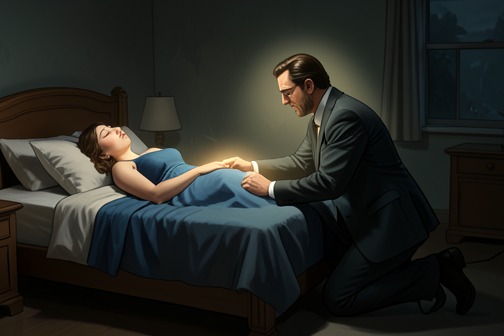
[Esme](entity:character-recall-character-esme-8406273b4a78)’s death in [Dorian](entity:character-recall-character-dorian-d83525ba2575)’s arms is both a literal loss and a delayed recognition: he sees her die before he can acknowledge what she means to him, and only later understands his shock and grief as signs of love. The scene’s force lies in that divide between Esme’s final faith in him and Dorian’s belated ability to name what he feels.
## The Death and Dorian’s Immediate Response
In the memory that returns to Dorian, Esme is dying in his arms. He recalls her blue dress, the soft curves of her body, her lips parted by weakness, and her hazel eyes still filled with love as she looks at him. The details make the death intimate and physical, not distant: Dorian remembers the person before him as her strength fails and the light leaves her eyes.
Yet what defines his immediate response is not a declaration of love. He remembers staring at Esme in shock at what she had done. That reaction marks a painful gap between her final act and his ability to understand it. At the time, he is overwhelmed by the fact of her death and cannot meet the love visible in her face with recognition of his own. The memory preserves that failure alongside the tenderness of the image; Dorian cannot remember Esme’s death without also remembering how little he understood while she was still there.
After her death, he tells her goodbye to the stars, just as clouds cover the gap through which he had been looking. The gesture gives his farewell a small, visible endpoint: the stars are briefly present, then obscured as he addresses Esme in their direction. He believes she died with love in her heart for him, rather than dying from his hatred, and says he is glad of that difference even as his soul aches. His relief is inseparable from remorse. He thinks he did not deserve her, and recognizes that the hope she carried for them was false, though it remained hope nonetheless.
## Esme’s Final Words and Dorian’s Remorse
Esme’s last explanation of the separation is framed as an attempt to spare Dorian a choice between her and his friends. She tells him, “At least now you won’t have to choose between your friends and me. You would have hated me no matter what. It’s better this way.” Her words present her death as preferable to a future in which Dorian would have to choose, and assume that his hatred would have followed either way. The account does not resolve that belief into a shared understanding between them; instead, Dorian is left to measure it against what he later discovers about his own feelings.
His farewell also contains a bitter contradiction. Dorian is glad Esme died with love for him, yet he believes he had told her that he did not deserve her. He describes her hope in their relationship as false, but is relieved that she retained it before she died. That relief does not undo the cruelty he associates with his own words or make their hope mutual in her final moments. It shows how, after losing her, he clings to the fact that she loved him even while judging himself unworthy of that love.
## The Memory Returns Through [Rose](entity:character-recall-character-rose-154df6dd1d30)’s Death
Esme’s death becomes newly legible when Dorian witnesses [Draco](entity:character-recall-character-draco-5a037d4d1c74) grieving as Rose takes her final breath. The sight of the general in tears brings back the memory of Esme’s dying body in Dorian’s arms, including the blue dress, her weakening lips, and the love in her eyes. The parallel does not make the deaths identical; it forces Dorian to see his own loss through another person’s visible grief. Rose and Draco had looked at each other with love until she died, while Dorian recalls that he had stared at Esme in shock.
The present scene intensifies that recognition through the reactions around Rose. [Echo](entity:character-recall-character-echo-748e2d408c30) howls for the loss of her friend, and [Phillip](entity:character-recall-character-phillip-0559221f1a2c) cries, running his fingers through his hair. Their grief and the renewed fighting frame loss as something that is both intimate and public: one death is mourned in the faces and voices of those who loved the dead, while violence continues around them. Dorian’s attention, however, turns inward. Seeing Draco’s sorrow makes his own buried memory return with a force he had not allowed it before.
## Belated Recognition and the Event’s Consequences
When Phillip tells Dorian that he is realizing he loved Esme, Dorian initially resists the claim. He calls their time together a brief, beautiful passing star, then insists that he did not love her. But Phillip gives the denial a specific explanation: Dorian loved Esme and lost her, and had pushed the memory of her death far back in his mind. Hearing Rose’s last breath, Phillip argues, has brought forward both Esme’s love and the loss of it. Dorian’s denial falters; he feels that it is a lie and admits inwardly that he found love where he had not expected it, right in front of him.
That recognition changes what Dorian can say about the past, but arrives too late to change Esme’s death. As Phillip urges him to help change the Fates’ design and bring the dead back, Dorian identifies the fear beneath his resistance: he loves Esme and does not want to see the look in her eyes when it is already too late. His statement connects the remembered image of her loving gaze to the prospect of another irreversible loss. Esme’s death therefore remains active in the story after the event itself: it is the wound that Dorian has suppressed, the memory Rose’s death reopens, and the loss that finally makes him name his love. The revelation does not erase his earlier shock or his remorse. It gives both their meaning, while leaving the central consequence untouched: he understands Esme’s love and his own only after he has lost her.
Event 17
Asher's time-reversal ritual
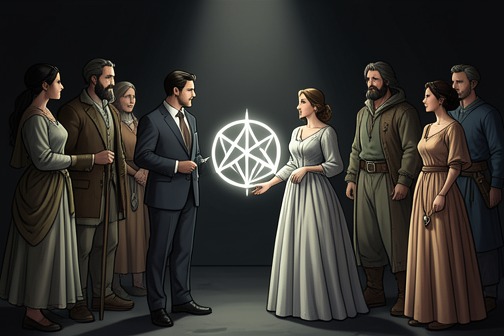
[Asher's time-reversal ritual](entity:event-recall-event-asher-s-time-reversal-r-cbf44682e6ca) is the decisive attempt to undo the course of the war by combining [Asher](entity:character-recall-character-asher-01705a571519)'s magic with the divine blood of [Phillip](entity:character-recall-character-phillip-0559221f1a2c) and [Dorian](entity:character-recall-character-dorian-d83525ba2575). Proposed as a difficult but possible return to an earlier point in history, the ritual turns their shared ancestry into a means of changing the present; its completion is followed by a world that appears restored to normal.
## Purpose and Conditions
The proposal rests on a distinction between those who carry divine power and those who are themselves descended from the gods. Phillip points out that he and Dorian possess the blood of the ancient [Greek gods](entity:creature-recall-creature-greek-gods-db44e9327d8d), while Asher, holding [Echo](entity:character-recall-character-echo-748e2d408c30), is the person whose magic may make that inheritance useful. The plan therefore depends on a specific combination: divine blood from the two men and magical ability from Asher. It is not presented as a power either bloodline can exercise alone.
The proposal comes with an acknowledged uncertainty. The speaker explains that future visions show Asher inconsistently: sometimes he can be seen, sometimes he cannot. That irregularity does not establish that the ritual will succeed; instead, the plan is described as difficult, though not impossible. The uncertainty makes Asher's role more than a convenient source of magic. The future itself has not yielded a clear answer about him, yet the characters consider his help their route to acting on the past.
The possible reach of the spell is expressed through several points of return. It might take events back to before [Rose](entity:character-recall-character-rose-154df6dd1d30) arrived in Dorian's coop, before [Esme](entity:character-recall-character-esme-8406273b4a78) and Dorian became a couple, or before the war. These alternatives give the proposal personal as well as historical stakes: the target is not merely the conflict's end, but an earlier world in which relationships and the events leading to the conflict have not yet taken their known course. The evidence presents these as possibilities, not as a settled choice of a precise date or moment.
## Consent and Preparation
Dorian is the first to ask about the catch, voicing the practical concern that accompanies a plan with consequences not yet specified. The question briefly holds the group at the threshold between possibility and commitment. The exchange does not provide a detailed account of the cost, but it shows that the risk is recognized rather than ignored.
The decision that follows is affirmative: the participants agree to proceed. This moment matters because the ritual is not initiated as an accidental effect or an imposed act. Faced with an uncertain means of changing the past, the characters choose it. The decision brings the discussion of blood, magic, and possible destinations into action, while leaving the precise terms of the outcome unresolved until the spell takes effect.
## The Ritual's Performance
Asher invokes the elements of time and space, placing the attempt within a cosmological frame rather than treating it as an ordinary use of power. His spell then names three kinds of blood: human, divine, and immortal. The sequence joins the human participants to the supernatural inheritance at the heart of the plan, making the mixed blood already brought together central to the ritual's operation.
The invocation calls on the keepers of time and space and describes tracing a line into the past. Asher uses a sword of lightning as part of the rite. It begins to glow; he struggles to move it, then drives it into the ground where the participants' mingled blood lies. The action gives the spell a visible point of contact: a spoken appeal to time and space is joined to the blood and to the sword striking the ground. The narration marks the act as physically overwhelming for the first-person speaker, but does not detail an injury or explain a further price. The ritual's completion is abrupt: after the spell, the account says simply that it is over.
## The Return to an Ordinary World
Phillip's voice is heard after the ritual, and the speaker sits up to look around. The scene has changed sharply. The sky is blue, the sun is shining, and people walk as though they had not been part of a supernatural war. Phillip, too, appears different from the person in the ritual scene: he wears clean clothes and seems notably more cheerful. These details present the aftermath not as a continuation of battle, but as a return to everyday conditions.
That return is conveyed through contrast rather than an explanation of the mechanics. The invocation had called for a path into the past; afterward, daylight and ordinary public movement provide the clearest evidence that the world has been reset. The people around the speaker appear not to remember the supernatural war, although the scene does not specify what each person remembers or describe the exact temporal point to which events have returned. Phillip's presence links the new scene to the participants who made the attempt, while his changed appearance reinforces the sense of a different circumstance.
## Narrative Significance
The ritual changes the story's relation to time from a forward-moving struggle into an opportunity to begin again. Its stakes are deliberately broad: the proposed reversal could precede the war itself, as well as events in the lives of Rose, Esme, and Dorian. The result therefore matters not only as a response to conflict but as a possible alteration of the relationships and decisions that preceded it. The scene confirms a return to an apparently ordinary world without fully accounting for all the consequences, leaving the contrast between the remembered catastrophe and the visible normality to carry the force of the reversal.
The ritual also depends on cooperation across different kinds of power. Phillip and Dorian contribute divine blood; Asher contributes magic; and the proposed intervention is accepted despite acknowledged uncertainty. The spell's final image—the sword driven into the ground where the blood has mingled—concentrates those conditions into a single act. What follows is not a narrated victory over an opponent but a changed setting: a bright sky, untroubled passersby, and Phillip standing in clean clothes. That quiet reset makes the ritual the hinge between the world shaped by the war and the possibility of a different past.
Event 18
Dorian and Esme's reunion after the time reversal
[Dorian](entity:character-recall-character-dorian-d83525ba2575) and [Esme](entity:character-recall-character-esme-8406273b4a78)’s reunion after the time reversal turns a return to the past into a personal reckoning: Dorian reaches for the woman he once failed to love openly, while Esme recognizes him, remembers what came before, and chooses to meet his confession with affection rather than condemnation. The encounter gives their second chance its emotional substance. Time has changed, but neither the harm Dorian caused nor the love that survived it is erased.
## The second chance and its stakes
The reunion follows a spell by [Asher](entity:character-recall-character-asher-01705a571519), using the blood of Dorian and [Draco](entity:character-recall-character-draco-5a037d4d1c74), that sends them back to a time when Esme is alive. The reset places them in [Seahill](entity:location-recall-location-seahill-4b7d6e6652b8) one year before Dorian left the city in chaos. It does not, however, make everyone’s memories uniform: people without powers remember nothing, while those with powers may or may not retain the former timeline. Dorian and his body from the earlier point in time have merged, so there is no younger version of him to encounter. The past is therefore a changed present, not a meeting between two Dorains.
[Phillip](entity:character-recall-character-phillip-0559221f1a2c) explains these conditions and invites Dorian to join the effort to make the Hero Society better than it had been. Dorian rolls his eyes at the invitation, which Phillip leaves open, but the exchange establishes that the return is more than a private escape. A public and institutional future also awaits him. For the immediate moment, though, Phillip names the people they have been given another chance to reach: [Rose](entity:character-recall-character-rose-154df6dd1d30) is at her apartment, Esme is working at the hospital, and [Echo](entity:character-recall-character-echo-748e2d408c30) is driving to her apartment. His appeal to make the second chance count frames the reunion as one part of a broader return to lives interrupted by the prior timeline.
## Dorian goes to find Esme
Dorian does not wait to settle into the life he had a year earlier. He flashes to his office, which looks as he remembers it, and goes looking for Esme without even changing his clothes. The familiar office anchors the return in ordinary details, but his purpose is not to resume routine unchanged. He has already begun to imagine the encounter’s possible outcomes: Esme might remember their relationship, fail to remember it, hate him, or forgive him. That range of futures makes his decision a risk rather than a certainty.
The uncertainty is especially charged because Dorian remembers the man he had been before. He wonders whether Esme will see him as the doctor who was an asshole to her rather than as the man who later loved her. He has also begun to listen differently to the people around him. Instead of reacting with annoyance to their comments about the two of them, he wants to show them—and Esme—that he can become the man she deserves. His resolve does not guarantee forgiveness; it gives him a reason to make the attempt.
## Recognition at the door
The meeting begins with a small knock. Dorian’s breath catches as the handle moves and the door opens slowly. Esme enters and addresses him as Dr. Dorian, asking what trouble he has got himself into. Her hazel eyes are filled with annoyance, and the familiar teasing tone makes the reunion both intimate and uncertain: she is present before him, but Dorian still cannot know what she remembers or how she will receive him.
The narration then gives way to Esme’s perspective. She senses that something is different but cannot immediately make herself speak; she is still guarding her heart. Dorian closes the short distance between them and tells her that he loves her, apologizing for having been too much of an asshole to see it. His admission names the failure that separated his earlier self from the partner he now wants to be. It is not a denial of what happened, but an attempt to speak plainly where he had previously failed to recognize his own feelings.
## Memory, confession, and forgiveness
Esme’s legs give way, and Dorian catches her, sitting back in the chair with her on his lap. She cries, and he hopes the tears are happy ones. Her answer makes the crucial fact clear: she remembers that she sacrificed her life for him. She explains that these are happy tears because the man she gave her life for loves her in return. Her response confirms that the spell has not simply returned her to life without the past; she carries the cost of the former timeline into this meeting.
Esme then checks that Dorian is real, running her hands over him, and asks what happened. Dorian first asks whether she is sure she wants to hear. When she says yes, he tells her that he started a war and that people died. Seeing one particular person take their last breath opened his eyes. He explains that Asher used his and Draco’s blood in a spell to go back to a time when Esme was alive, and that he gave everything up to see her breathing again and tell her he loved her. His account connects the reunion directly to both the violence of his former course and the loss that finally made him change.
## A relationship begun again
Dorian asks whether Esme hates him. She acknowledges that he made major mistakes but says that, in the end, he made things better. She describes falling for the villain and discovering that the villain was really the hero in the end. The reversal does not absolve the war or the deaths; it expresses her judgment of the man who chose to turn back and reach her. Her forgiveness rests on his actions as well as his declaration.
Esme tells Dorian that she loves him, and they kiss. The scene closes on the time they have recovered and their determination not to give up a minute of the present without touching. Their reunion therefore answers the earlier uncertainty not with proof that the past can be undone, but with mutual recognition: Esme remembers, Dorian accepts responsibility, and both choose a relationship in the life restored to them. A knock interrupts them, and [Melissa Ann](entity:character-recall-character-melissa-ann-eca20ce5ebe9) enters, bringing the intimate moment back into the shared world around them.